
How Baltimore City Arrests Work
Most arrests on Baltimore streets start with Baltimore Police Department officers. Patrol and investigative work belongs to BPD. The Baltimore City Sheriff's Office plays a different part. It guards courtrooms and handles civil enforcement. It also serves court papers and warrants. It runs no booking center. Maryland's Division of Pretrial Detention and Services owns the intake chain. That division sits inside the Department of Public Safety and Correctional Services. DPDS states that everyone arrested in Baltimore City, or on a city warrant, passes through its system. Baltimore Central Booking and Intake Center is the single first stop.
That route tells you where an arrest begins, not where a person stays. After intake, someone may remain at BCBIC or transfer to another DPSCS detention site. That person may also enter state corrections after sentencing. Release is common too. Each custody change can push the useful record to a new source. The city held an estimated 568,271 residents on July 1, 2024. The 2020 Census count was 585,708. Baltimore is an independent city, and no smaller municipalities sit inside it. Baltimore County is a separate jurisdiction entirely. That split matters whenever a search result says only "Baltimore."
Where Baltimore Arrests Appear
No single official page gathers every Baltimore City recent arrest, booking photo, charge, custody update, and court outcome in one place. The right source depends on the stage. Start with official records. News pages and private sites can be selective, stale, or actually covering Baltimore County instead of the city.
| Channel | What it provides | Photo | Status |
|---|---|---|---|
| BPD Arrests layer | Weekly charge, date, location, district, post, and neighborhood data | No public photo field | Official city police data |
| DPSCS locator | Covered current state or short-sentence custody by name | No booking photo | Official state custody source |
| Maryland Case Search | Case events, hearings, and dispositions where publicly available | No booking-photo search | Official court index |
| BPD newsroom | Selected arrest announcements and police releases | Sometimes | Official but not complete |
| Local news | Selected reported incidents and court developments | Story-specific | Unofficial secondary coverage |
The BPD newsroom illustrates the selective announcement channel used for some notable Baltimore arrests.
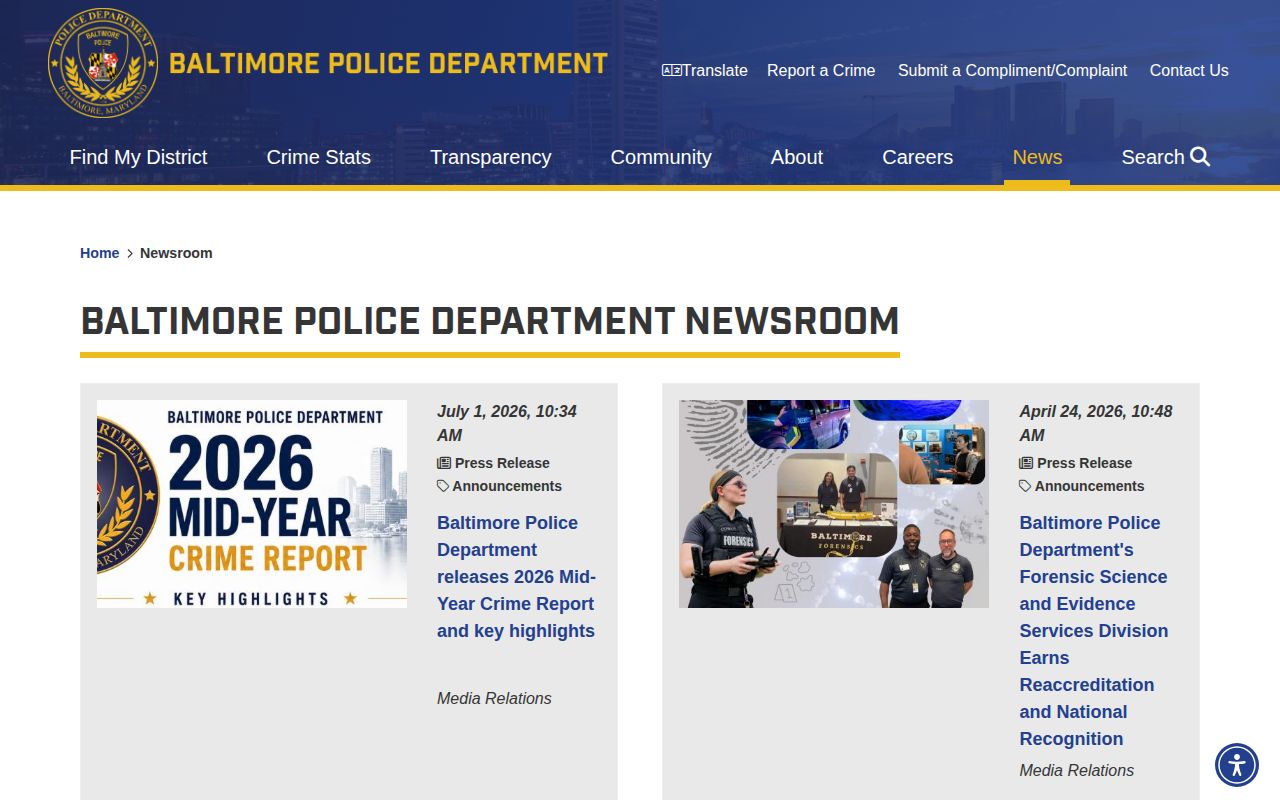
What that page shows is a news index, not a booking roster. Silence there never means no arrest happened.
Find a Baltimore Arrest Record
A good search follows the event across systems. One empty result is not a final answer. Keep the legal name, the approximate arrest date, the arrest location, and any incident or arrest number together in one place. Those details cut down false matches and help an agency locate a record that never appears online.
- Check BPD’s newsroom for a selective announcement, then use the official weekly Arrests data for the event’s date, charge, district, or neighborhood.
- Search the DPSCS Incarcerated Individual Locator by exact first and last name for covered current custody. A miss may mean release, excluded custody, or upload lag.
- Search Maryland Judiciary Case Search for the court case and disposition. Use the clerk when an older or restricted online summary does not answer the question.
- Use Maryland VINE when the goal is custody or court notice for one person. Register again when the case or custody system changes.
- Send a focused Maryland Public Information Act request to the agency that holds the specific police, intake, or photo record.
The county-wide Baltimore City arrest and booking guide lays out the full custody, roster, photo, warrant, and records-request paths. For a wider data window, the Baltimore City Police Blotter is the place to look. It digs into the weekly layer and older records.
Note: a current locator result does not prove a new arrest, while a missing result does not disprove one.
Baltimore Arrest Data Runs Weekly
BPD's Arrests layer is the strongest multi-day official source. But it is built for data analysis, not identity lookup. Current metadata says the layer refreshes weekly. Each row carries an arrest number, incident number, age, gender, race, arrest date and time, locations, offense, charge, district, post, neighborhood, and geolocation. Names are absent. So is any booking-photo field. The BPD Open Data page also notes that the ComStat executive summary updates on Thursdays.
None of this promises same-day posting. No official source sets an hourly deadline, a weekend rule, or a fixed online roll-off date. Today's booking may sit in central intake well past the next refresh. Older rows can linger anyway. But no source promises a permanent archive. When field lists differ, trust the current metadata over older Socrata-era descriptions. Ask BPD for the retention schedule when an older arrest row can no longer be found.
Baltimore Police Arrest Requests
The Baltimore Police Office of Legal Affairs handles Maryland Public Information Act requests for anything BPD holds. Give the legal name, arrest date, and arresting agency. Add an incident or arrest number if known. Say exactly which item you want. That might be the arrest report, a closed-investigation file, or a booking or arrest photograph. Maryland's public-record definition can include photographs, though. Release is not guaranteed. Investigatory, juvenile, privacy, or other lawful limits can still apply.
BPD Public Information Requests
Baltimore Police Department, Office of Legal Affairs
242 W. 29th Street
Baltimore, MD 21211
DCU@baltimorepolice.org
410-396-2495
BPD headquarters sits at 601 East Fayette Street, Baltimore, MD 21202. The city's 311 line takes general non-emergency calls. Records held by DPDS or another state unit go through DPSCS PIA instead. That route may bounce a local police record request back to BPD. The older BPD report form lists a $10 search fee. That price does not cover a booking photo. Describe the record precisely. Then wait for the custodian's fee and disclosure decision.
Where Baltimore Arrestees Are Booked
Baltimore Central Booking and Intake Center handles processing for people arrested in the city. It is not a county sheriff jail. The facility's official page lists its address, phone number, visit rules, and current notices. No live roster appears there. There is no same-day booking table and no photo gallery either. To find someone in state custody, the DPSCS locator takes a first and last name. Its reach has limits, though. Not everyone processed through Baltimore intake appears. Released people and some short-sentence DPDS detainees fall outside it too.
Booking generates rich data inside government systems. Identifiers, intake times, charges, custody decisions, and photographs all get captured, and Livescan material shows mugshots travel between criminal-justice agencies when available. None of that internal flow requires public display, so the BPD weekly dataset omits names and photos and a booking photograph must be requested from the agency that holds it.
Baltimore Arrest News Is Selective
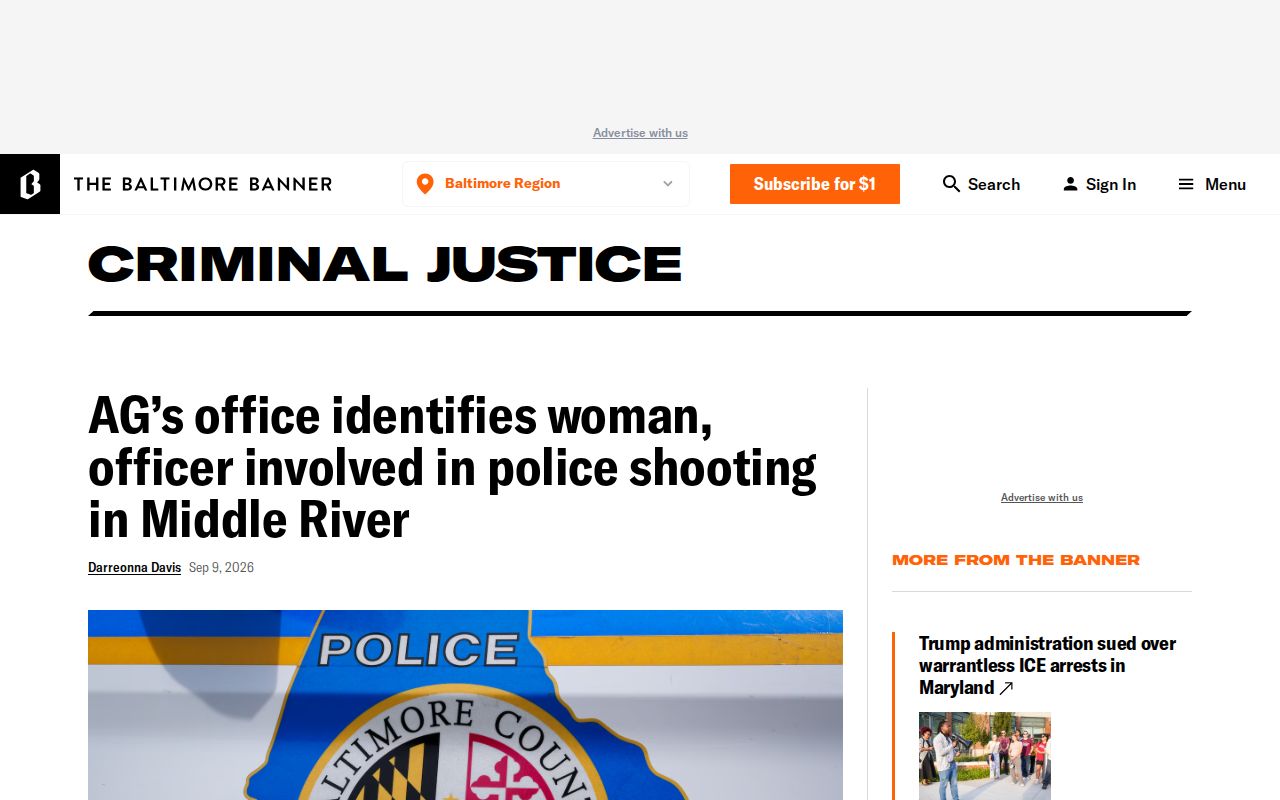
Baltimore news fills context gaps. It never replaces an official record. WBAL and WBAL-TV cover crime, arrests, warrants, and courts. The Baltimore Banner criminal-justice page tracks arrests, court developments, and public-safety policy. CBS Baltimore and The Baltimore Sun also report selected cases, and any story may run with a police-released photo, a scene image, or no picture at all. Publication rides on editorial interest, not on who passed through Central Booking.
Mugshot sites rarely cover the city well. RecentlyBooked’s Maryland page skips Baltimore City. Arrests.org names other counties. Mugshots.com, Mugshots.zone, and Busted Newspaper carry no city section either. A Mugshots.com page labeled Baltimore County covers a different jurisdiction. These aggregators run stale, jumbled data. For reliable Baltimore arrest records, BPD, DPSCS, VINE, and Maryland courts remain the trustworthy sources.
Baltimore Arrest Archives Differ
Old Baltimore records can vanish from live web tools without leaving government collections. Retention follows each agency's approved schedule. Maryland State Archives guidance says so. Start a modern booking request with BPD or DPSCS. Ask whether the series still sits with the agency, moved to the State Records Center, transferred to an archive, or was destroyed under the approved schedule. Court files follow separate access rules, so a clerk may hold material that Case Search no longer summarizes.
The historical trail runs deep. State Archives listings include Baltimore City Jail material from 1900 through 1910 and from 1925 through 1935. Baltimore City Archives guidance points to older police records and arrest indexes in Annapolis. Those holdings help family, legal, and historical research. They do not prove any current BCBIC booking photo was archived. Federal custody runs a separate path. The Bureau of Prisons locator finds federal prisoners, and ICE's locator covers immigration detention. Neither one shows a Baltimore City criminal booking.